


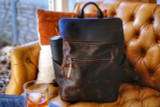


I’ve been making full grain leather bags for more than 20 years, and I’ve watched people do some pretty strange things to them.
One guy emailed us after his dog chewed on the corner of his briefcase. Another took his through a motorcycle wreck in the rain. And I’ve personally carried mine through Mexican bus stations, dusty roads, airports, coffee shops, and enough taco stands to qualify as field research.
The good news is that full grain leather is tough. Really tough. We build these to last 100 years, but that doesn’t mean you should drag them through the mud. Well, actually, you can. Just don’t leave the mud on there forever like it’s a new design feature.
A good full grain leather bag is not fragile. It wants to be used. It wants sun, travel, scratches, stories, and a little character. But it also needs a tiny bit of common sense every now and then.
This is everything I know about how to care for full grain leather, without turning your bag into a part-time job.

First, Know What You’re Taking Care Of
Not all leather is the same. That is like saying all food is the same because technically a hot dog and a ribeye are both food. One is clearly doing better work.
Saddleback bags, briefcases, wallets, and travel gear are made from full grain leather. That is the strongest, outermost layer of the hide, complete with its natural grain. It is not sanded down, painted over, or dressed up in a fake mustache to hide what it is.
Because full grain leather still has its natural fibers, it develops a patina. That means it darkens, softens, and takes on a richer look from the oils in your hands, sunlight, travel, and life in general.
That scuff you got boarding a plane in Guadalajara may bother you today. In a few years, it will be part of why your bag looks better than the day you bought it. You, on the other hand, may not be aging as gracefully. I know I’m not.
So the goal of leather care is not to make your bag look brand new forever. That would be weird. The goal is to keep the full grain leather clean, nourished, and ready for whatever you decide to throw at it.
The Best Leather Care Plan Is Boringly Simple
People ask how often they should condition their full grain leather bag. They are hoping for a complicated answer with a schedule, a chart, and probably a special hat.
Here it is: clean it when it gets dirty. Condition it when it starts looking dry. Store it somewhere sensible when you’re not using it.
That’s it.
For most people, a quick wipe-down every so often and conditioning once or twice a year is plenty. If you live in a hot, dry place, carry your bag every day, or take it on desert adventures where every surface is trying to become part of your bag, you may condition it a little more often.
Too much conditioner is not better. Your bag is not a baked potato.
How to Clean Full Grain Leather Without Doing Something Dumb
Start with the least dramatic option. A soft, dry cloth will handle most dust, loose dirt, and whatever mystery crumbs have collected on the bottom of your bag.
Use a microfiber cloth, an old clean T-shirt, or a soft cotton rag. Wipe gently. You are cleaning your bag, not sanding a deck.
For a little more grime, dampen the cloth with clean water, wring it out well, then wipe the full grain leather in small, gentle circles. The cloth should be barely damp, not dripping like you just rescued it from a swimming pool.
Let the bag air-dry naturally afterward. Keep it away from heaters, hair dryers, and direct heat vents. Heat can dry out leather too fast and make it stiff. It is basically the sunburn of the bag world.
If you have a stubborn spot, use a leather cleaner that is made specifically for full grain leather. Test it first on a small, hidden area, like the underside of a flap or the back of a strap. Different hides absorb things differently, and the bag deserves a little caution before you go all science experiment on it.
Do not soak the bag. Do not put it in the washing machine. Do not use dish soap, laundry detergent, baby wipes, bleach, alcohol, acetone, gasoline, or whatever Uncle Rick says works on everything.
Uncle Rick is wrong about more things than he knows.

What About Ink, Grease, or a Coffee Disaster?
First, take a breath. Then blot, don’t rub.
For a fresh spill, use a clean dry cloth to blot up as much as possible. Rubbing pushes the mess farther into the grain and gives you a bigger problem with more elbow grease. Nobody needs that.
For grease, sprinkle a little cornstarch or talcum powder on the spot, let it sit overnight, and brush it off gently the next day. It can help draw out the oil. If the stain is serious or sentimental, take it to a reputable leather professional instead of turning your kitchen into a chemistry lab.
Ink is a hard one. Sometimes it fades with time and use. Sometimes it becomes part of your bag’s biography. My general rule is that a scar from real life is better than a shiny, damaged patch from an overconfident cleaning attempt.
Leather Conditioner: A Drink, Not a Bath
Full grain leather contains natural oils, but sun, dry air, and hard use can slowly pull those oils out. Conditioner helps replace some of what has been lost and keeps the leather from getting overly dry.
When your bag starts looking thirsty, condition it. You will know. The surface may look dull or feel less supple, especially around the handles, straps, folds, and corners.
Choose a quality leather conditioner that is appropriate for full grain leather. Read the label. Avoid products with silicone, heavy waxes, or weird mystery ingredients that promise to make your bag “waterproof, glossy, and new forever.” That sounds about as honest as a toupee in a windstorm.
Put a small amount of conditioner on a clean cloth, then work it into the leather in light, even circles. A little goes a long way. Start small because you can always add more, but taking conditioner back out is like putting toothpaste back in the tube.
Let it absorb, then buff off any excess with another soft cloth. The full grain leather should feel nourished, not greasy.
Always test conditioner in a hidden spot first. Conditioner can darken leather temporarily and sometimes permanently, particularly lighter tan/light brown leather. That is normal. It is also why you don’t begin by dumping half the jar on the front of your favorite bag.
For Saddleback colors, remember that Chestnut is a red brown/reddish full grain leather, Tobacco is tan/light brown, and Dark Coffee Brown is dark brown. Each one will change with age in its own way. That is not a defect. Nature doesn’t do perfect repetition. Even my kids came from the same two people and could not be more different.

Rain Happens. Your Bag Will Survive.
I used to live in Portland, Oregon, where the sky seems to leak slowly for eight months a year. Then I spent enough years in Mexico to learn that when rain comes, sometimes it comes down like somebody up there kicked over a bathtub.
Full grain leather can handle rain. It is animal hide, not a sugar cookie.
If your bag gets wet, empty it if you can and gently blot off the water with a soft towel. Reshape it, especially any soft sides or pockets, and let it dry at room temperature with good airflow.
Do not put it near a radiator. Do not use a hair dryer. Do not leave it in the blazing sun to dry out. Fast heat can make full grain leather stiff and unhappy, which is also how I feel when someone puts onions in my food without asking.
If the bag was really soaked, loosely stuff it with clean white paper or an unprinted cloth to help it hold its shape while drying. Don’t overstuff it. You are supporting it, not preparing it for a Thanksgiving parade.
Once it is completely dry, you can apply a light coat of leather conditioner if it looks dry. Water spots often blend into the patina with normal use. Give your bag time before you panic.
Scratches Are Not a Medical Emergency
The first scratch hurts a little. I get it. You paid good money for a full grain leather bag, then the airport security tray, a hotel desk, your kid’s bicycle, or a rogue shopping cart gives it a scar.
But full grain leather is supposed to show life.
Many light scratches and scuffs can be softened by rubbing them gently with clean fingers. The natural oils from your hands can help the leather settle down. For a deeper scuff, use a tiny amount of conditioner on a cloth, rub lightly, and give it some time.
Don’t attack scratches with shoe polish, paint, marker, or a random bottle of “leather repair” goo from the hardware store. Those fixes can cover the natural grain, create a strange shiny patch, and age about as well as a PT Cruiser.
A worn Saddleback briefcase should eventually look like it has been places. My old bags have marks from travel, coffee shops, car floors, and adventures with my family. They are better for it. Richer. More personal.

Where Your Bag Sleeps Matters Too
When you are not using your bag, keep it in a cool, dry place with airflow. A closet shelf is great. The trunk of a hot car for three months is not.
Keep it out of prolonged direct sunlight. A little sun during normal use is fine. Leaving a red brown/reddish bag in a sunny window all summer is an experiment you do not need to run.
If you are storing a bag for a season, empty all the pockets first. Then lightly stuff it with clean white paper or a soft cloth so it holds its shape. Store it in a breathable cotton dust bag, pillowcase, or something similar.
Do not store full grain leather in plastic. Plastic traps moisture, and trapped moisture can lead to mildew. Mildew smells bad, looks bad, and brings absolutely nothing good into your life.
Also, don’t hang a heavy bag from one strap for months. Lay it flat or stand it upright with support. Your shoulders would complain if you carried a bowling ball on one side for six months. So would your strap.
Things You Should Never Do to a Full Grain Leather Bag
There are some things I should not have to say, but after two decades in the leather business, I have learned that I should probably say them.
- Don’t wash it in a washing machine.
- Don’t soak it in a bathtub.
- Don’t use household cleaners, bleach, alcohol, acetone, or furniture polish.
- Don’t use a hair dryer, radiator, or oven to dry it. Yes, oven. Somebody somewhere has considered it.
- Don’t coat it in thick wax, shoe polish, or greasy oils unless you enjoy a dark, sticky bag that attracts dust like a magnet.
- Don’t leave food, pens without caps, wet clothes, or a banana in the pockets for weeks.
- Don’t store it in plastic or a damp basement.
- Don’t expect it to stay perfectly pristine while you actually use it.
We make over-engineered full grain leather goods because life is not a showroom. Your bag should work hard, carry what you need, and earn its scratches honestly.
That is why we back it with our 100-year warranty. Not because we think you will never use it, but because we expect you to. You might take it around the world. Your kids might take it after you. They’ll Fight Over It When You’re Dead.
The Short Version for People Who Skipped Ahead
Here is your leather care guide in about 30 seconds:
- Wipe dirt off with a soft dry cloth.
- Use a barely damp cloth or proper leather cleaner for tougher grime.
- Let wet full grain leather air-dry slowly, away from heat.
- Condition lightly when it looks dry, usually once or twice a year.
- Store it cool, dry, shaped, and out of plastic.
- Let scratches become stories before you decide they are problems.
Buy quality, buy once. Then take reasonable care of it.
Your full grain leather bag does not need to be babied. It needs to be used. Take it to work. Take it through an airport. Throw it in the passenger seat for a road trip. Let your wallet get soft from years in your pocket. Let your briefcase collect a few good scars.
And if you have an old Saddleback bag with a great story, post a photo and tell us where it has been. I’d rather see a bag that has lived than one that has spent its whole life sitting in a closet looking nervous.